Friday, 26 July 2013

Best upcoming phones in Q3 / Q4

1. Moto X

After the Acquisition of Google, there is no great phone from Motorola. Rumours suggested that Motorola working on the biggest development and it will their Flagship model with the guidance from Google. Motorola Boss Dennis Woodside has popped the few details about he Moto X and the phone won’t debut until late in the third quarter.
Motorola is known for its great hardware and good performance from that. The Moto X has so many innovative features , the self-awareness capability is one of them. Many sources suggested that Motorola is hardly working on this feature. For example, this phone will enable certain feature when you take out the phone from pocket and It will turn on the camera app automatically when you are going to take a picture. This feature looks promising and many dubbed the Moto X as the Google’s Next Big Thing.
There is no further specifications about the Moto X but the hardware capabilities are up to the standard. It may have the Stock Android OS partially not like the nexus one, and it’s worth waiting for.

2. Samsung Galaxy Note 3

Samsung Galaxy Note III leak Upcoming Android Phones, The Biggest, You Must Wait to Buy That
Currently Samsung is working on the third version of the phablet “Galaxy Note 2″. There is many leaks suggested that it is going to be the very powerful phone, runs on the new Qualcomm Snapdragon 800 Processor. Two days before the leaks from the Samsung research division revealed and confirmed that the Note 3 will feature an 2.3GHz quad-core Snapdragon 800 processor and its internal model number will be  SM-N900. It sports a  6-inch full HD Super AMOLED display, a 13-megapixel camera, Android 4.2.2 Jelly Bean.
Also the Note 3 will borrow some cool features from its flagship smartphone Galaxy S4. Samsung hasn’t officially announced the features and specifications of  Galaxy Note 3 yet. But likely to be announced at IFA trade show in September.

3. HTC T6 (HTC One Max)

HTC’s Upcoming Phablet named HTC One Max from the codename of HTC T6. The Struggling HTC is doing well with their flagship model HTC One which has the exciting features and sense 5 UI. HTC also in the process of making the mini version of the HTC One as a HTC One Mini. HTC’s 5.9-inch phablet project is to counter the Samsung Galaxy Note 3. HTC has no phablet models in their catalogue, so they are coming with One Max.
According to the rumours, the phablet has bodyshell with a 5.9-inch 1080p Full HD display, a Qualcomm Snapdragon 800 quad-core processor at the clock speed 2.3Ghz and will have a big  3,300mAh battery. HTC one Ultra pixel camera technology and booms audio. It will also have Stylus pen with great features.

4.Sony i1 or Honami

sony xperia i1 honami Upcoming Android Phones, The Biggest, You Must Wait to Buy That
Sony has jumbed into the Smartphone competition to catch the top spot by launching the Xperia Z in this year.  Sony Honami or i1 is their upcoming Android phone.
The specifications of the Sony i1, 5 inch Full HD Reality / Triluminos Display with X-Reality screen. It will have Snapgragodn S800 Processor with 2GB RAM and includes S Master Walkman mobile + Liquid Magnetic Mobile Speaker. And boasts a large 3000 mAh battery. It might be packed with Android 4.2.2 or 4.3
There is no news about price, the Sony i1 or Honami is set to be released sep or october.

Thursday, 25 July 2013

Karbonn S5 Titanium review


karbonns5-1.jpg
The Karbonn S5 Titanium is the successor to the S1 Titanium featuring an upgraded 5-inch qHD display and an 8-megapixel rear camera. The phone was launched for Rs. 11,990, around Rs.1,000 more than the S1 Titanium's launch price. The S1 Titanium is now available online for Rs. 9,990. Is it worth spending Rs. 2,000 more to buy the S5 Titanium? We try to find out how the phone fares in all departments in our review.

Build/ Design
The Karbonn S5 Titanium looks a little different from its predecessor and is thinner. It also looks more refined compared to the S1 Titanium. However, it features the same rectangular slab form factor with rounded corners. The phone comes in White and Deep Blue colour variants and we got a Deep Blue phone as our review unit.
The front of the phone features the 5-inch qHD display, three capacitive touch buttons for navigation, and the front camera lens, in addition to the proximity sensor and the earpiece. The bezel is not that wide on the sides and doesn't take up a major part of the front unlike the S1 Titanium.
karbonns5-3.jpg
The Power/Screen lock is located at the right side of the phone, while the volume rocker key is located on the left side. The 3.5mm headset jack and the Micro-USB port sit at the top.
While Karbonn has mostly taken care of our gripes with the S1 Titanium's design in the S5 Titanium, the back of the phone is still made of plastic and is extremely glossy. You could use it as a mirror but it's a fingerprint magnet and it'll be full of smudges as soon as you start using the phone. The 8-megapixel rear camera lens is located towards the top along with a flash. There's some Karbonn branding towards the bottom.
karbonns5-10.jpg
The back cover is removable and hides the battery compartment. The two SIM card slots and a microSD slot are located just above the battery compartment.
Display
The S5 Titanium comes with a 5-inch qHD IPS screen that has a resolution of 540x960 pixels and pixel density of 221ppi, which is decent, and graphics and text appear sharp, although a 720p screen could have taken it to the next level. The viewing angles looked good. However, it's really difficult to read or take pictures in sunlight, as the screen is extremely reflective. Videos and pictures looked good but colours appeared to be a little saturated just like the S1 Titanium's screen.
Software/ Interface
The Karbonn S5 Titanium runs Android 4.1.2 Jelly Bean. The interface is the same as that of the S1 Titanium and you can read about it in detail in our S1 Titanium review
Karbonns5UI.jpg
We like the fact that Karbonn has removed the redundant Search button and switched to the standard three button navigation.
Camera
The phone features an 8-megapixel autofocus shooter that takes good quality images in daylight. However, at times we observed that they were a little over-exposed. Pictures taken indoors under artificial light also came out well but suffered the same issue.
karbonns5camsample.jpg
The camera app is a little different from the stock Android camera app and unlike the S1 Titanium, doesn't feature the capability to simultaneously use the rear and the 2-megapixel front camera. The camera app features settings for white balance, exposure, aspect ratio, face-detection, red eye reduction among others. It also offers a Panorama mode but leaves out the HDR mode which was present in the S1 Titanium's camera app. There's a speed shot mode as well as the normal mode takes time to click photos.
karbonns5camsample2.jpg
The phone is also capable of shooting 720p video and we found the recording quality to be decent.
The front camera also takes decent photos and can be used for video chats as well as for self clicks.
Performance
The Karbonn S5 Titanium is powered by a 1.2GHz Qualcomm Snapdragon S4 MSM8625 quad-core processor. It has 1GB RAM onboard, and Adreno 203 chip for processing graphics. There is 4GB of internal storage, which is expandable up to 32GB via a microSD card.
With Android 4.1 Jelly Bean, the overall experience of navigation through the interface was impressive, thanks to Project Butter and the phone's quad-core processor. We did not experience any lag while launching apps, playing games, scrolling web pages or switching between apps. It is safe to say that performance wise, the S5 Titanium trumps other dual-core processor powered phones in this price range.
karbonns5-8.jpg
The phone also offers FM Radio unlike its predecessor, which gives you another reason to choose this phone over the S1 Titanium.
We were not able to play full-HD clips, but the phone supported formats like .AVI, natively. 720p videos can be played but stutter. The speaker on the phone delivers average quality sound at high volume levels, but there's some muffle when the phone lies on its back, as the speaker grill is located on the back. The headphones that come with the phone offer average quality sound output.
Call quality was good.
The phone comes with a 2000mAh battery, and based on our experience, it will last you a full day with medium to heavy usage, including 1-1.5 hours of phone calls, two e-mail accounts with push notifications, screen at maximum brightness, playing some music and video clips, Twitter notifications and WhatsApp chats. It's also worth pointing out that we had turned off Wi-Fi and auto-brightness, and the phone was hooked to a 3G network. Altering these settings might help in running the phone for a longer duration, depending on your usage pattern.
Verdict
The Karbonn S5 Titanium is a worthy upgrade to the S1 Titanium, offering a better build, improved camera, albeit stripped of some features and a bigger screen. It also offers FM radio if you like tuning in to your favourite local radio station. We'd recommend buying the S5 Titanium over the S1 Titanium though it will cost you around Rs. 2,000 more at this point in time.
We also recommend you to take a look at the Zen Ultrafone 701HD that comes at the same price point and offers Android 4.2 and a 720p display along with a better build quality.
Other quad-core processor phones in the budget range include the Micromax Canvas HD and the Xolo Q800.
Price: Rs. 11,990

Pros
  • Decent performance
  • Good camera
Cons
  • Plasticky back which is a smudge magnet
  • Reflective screen
Ratings (Out of 5)
Design: 3.5
Display: 3
Performance: 4
Software: 3.5
Battery Life: 3
Value for Money: 3.5
Camera: 3.5
Overall: 3.5

Spice Coolpad Mi-515 review

coolpad-mi-515-front-635.jpg


Build/ Design
The Spice Coolpad Mi-515 doesn't score much in the looks department. It looks like most other budget phablets available in the market. It's 140mm tall, 73mm wide and 9.9mm thick, and is definitely not a slim contender.
The 5.0-inch display dominates the front of the phone, with three capacitive touch buttons placed beneath the screen, while the earpiece, front-facing camera and the proximity sensor sit on the top of the screen with 'Coolpad' branding just below the earpiece.

There's a metallic Blue frame around the device that adds to the aesthetic appeal. On the right side is the power key while the volume rocker key is located on the left side. The Micro-USB port and the 3.5mm audio jack are placed on the top panel.
The back of the phone houses the 5.0-megapixel camera module and LED flash. Both the camera and the flash are enclosed in a metallic rectangular frame. There's some more Coolpad branding along with the Spice logo in the middle, while the speaker grille is located towards the bottom.
The Spice Coolpad Mi-515 is a dual-SIM (GSM + GSM) smartphone. Both SIM card slots and the slot for the microSD card hide behind the back cover, just above the battery slot. If one wants to change the SIM card, the device needs to be switched off, as the SIMs cannot be accessed without removing the battery. The body of the phone is plasticky and the device plain at best in terms of looks. The glossy back makes the phone slippery and difficult to grip. Having said that, the device did fit in our hands comfortably despite the 5.0-inch form factor.

Software/ Interface
The Spice Coolpad Mi-515 runs Android 4.1.2 (Jelly Bean) with some minor tweaks done by the company including skinning of app icons, colour schemes and settings toggles. It's not the latest version of the OS but almost all devices in this price segment feature the same operating system. In terms of additional functionality, the software has nothing new to offer.
The home-screen panel consists of five customizable screens. The notification tray includes toggles for settings such as Wi-Fi, Brightness, Rotation, Bluetooth, GPS, Data, Screen timeout and sound profiles.
Screenshot_01.jpg
The device comes with NQ anti-virus pre-loaded that helps safeguard the device from malware, viruses and similar threats with a free usage for a limited period. The phone also includes some preloaded apps that include Chrome, Facebook, Opera Mini, TOI, SpiceGang, Nimbuzz, WhatsApp and Twitter.
The phone also comes with the ability to update the operating system over the air through a Wireless Update utility.
Camera
The camera on the Spice Coolpad Mi-515 is a bit of let down. The 5.0-megapixel camera takes decent quality shots during well-lit conditions but disappoints when it comes to low-light and indoor shots. The images shot in low-light had a lot of noise, lacked detail and were grainy. Even photos clicked outdoors in bright light lack detail and the colour reproduction isn't accurate.
The camera app on the device does not offer too much in terms of options. A few camera features included in the handset are an HDR mode, face-recognition, colour effects, scene modes, and anti-flicker. Many would not mind the absence of a physical camera key but it would have added to the comfort of using the camera on the device.
spice-coolpad-mi-515-camera.jpg
Though the device supports HD video recording but we were not very impressed with the quality of the recorded videos.
Spice Coolpad Mi-515 also includes a VGA front camera. However, the quality of the front camera was not that great and it can be used for self-portrait shots at best. Overall, the device is not that great in the camera department.
PerformanceThe Spice Coolpad Mi-515 is powered by a 1.2GHz quad-core processor, and has 1GB RAM. There is 4GB of internal storage, which is expandable up to 32GB with the help of microSD card.
We did not experience any lag while browsing the Web or navigating on the device, however, we did experience lag while launching and exiting games like Dead Trigger and Temple Run 2.
The phone comes with Bluetooth, Wi-Fi, 3G, GPRS, EDGE, and Micro-USB connectivity options. Other major features include GPS, a-GPS. The phone also comes with FM Radio and offers good reception.
It is powered by a 2000mAh battery that easily lasts for more than a day with normal usage, including calling, browsing, playing games and using apps. The touchscreen QWERTY keyboard of the device was a bit sloppy and it took some time to get used to it.
We were able to play full-HD videos and the phone supported popular formats. The device doesn't offer much in terms of music playback. The sound quality was average through the supplied headset and the built-in speaker outlet. The call quality was good during our testing of the device.
Verdict
The Spice Coolpad Mi-515 is a good option among large 5.0-inch budget phones. The phone scores more in terms of its battery back up, performance and the presence of a 5.0-inch screen. The camera performance on the other hand was just average. However, the whole package at Rs. 9,449 is not a bad deal.
Those looking for alternatives can look at Karbonn Titanium S2 that also comes with a 1.2GHz quad-core processor and is priced at Rs. 10,200. The Intex Aqua Wonder, which is also not a bad option, available at a price point of Rs. 9,500. Looking beyond the Android world, Nokia Lumia 520 (Review |Pictures) is probably the best value for money offering in the sub-Rs. 10,000.

Price: Rs. 9449
Pros
  • Good performance
  • Value for money
Cons
  • Plasticky back
  • Average camera
Ratings (Out of 5)
  • Design: 3
  • Display: 3.5
  • Performance: 3.5
  • Software: 3.5
  • Battery Life: 3.5
  • Value for Money: 3.5
  • Camera: 2.5
  • Overall: 3

Micromax launches Bolt A35 for Rs. 4,250

Micromax_Bolt_A35.jpg

The Indian handset maker Micromax has launched Bolt A35 smartphone in the Indian market. This smartphone will run on Android 2.3.5 (Gingerbread) and is available in the market for Rs. 4,250. Micromax Bolt A35 comes with 10.1-cm full capacitive touch screen and is powered by 1GHz processor.
For camera, there is a 2.0-megapixel rear camera and a 0.3-megapixel front camera. Connectivity options include Bluetooth 2.1 and Wi-Fi. The smartphone comes with 1500 mAh battery, which according to the company delivers talk time of 4.5 hours. Bolt A35 comes with internal memory of 160 MB, which can be expanded further via a microSD card to up to 16 GB. There are no details in regards to the RAM on this smartphone.
Micromax Bolt A35 comes pre-loaded with 'Flash Transfer' app, which is aimed to improve the file sharing experiences experience of the consumer and making it easier and faster for users to share images, videos, songs etc. To use this 'Flash transfer' feature the users can just swipe to share files with their friends or drag content across the screen or simply shake and share. This feature is works only when the files are being shared between Android devices.
This app uses the Wi-Fi of one smartphone to create a Hotspot and sharing files over the private network.
With this smartphone the company is adding yet another smartphone category in its portfolio 'Bolt'. According to the company the Bolt category will consists of feature-rich phones. Micromax is also offering smartphones under Canvas series.
The company had recently launched A116 Canvas HD in the Indian market for Rs. 13,990. It is a quad-core smartphone that clocks speed of 1.2GHz. Micromax A116 Canvas HD come with 5-inch HD IPS screen that sports 1280x720 resolution and a colour depth of 16.7 million. It runs on Android 4.1 (Jelly Bean) out of the box and packs in a 2000mAh battery.
Micromax Bolt A35 Specifications
  • 10.1-cm full capacitive touch screen (approximately 4-inches)
  • 1GHz processor
  • 160MB of internal memory, can be expanded to up to 16GB
  • 2.0-megapixel rear camera
  • 0.3-megapixel front camera
  • Android 2.3.5 (Gingerbread)
  • 1500mAh battery

Wednesday, 24 July 2013

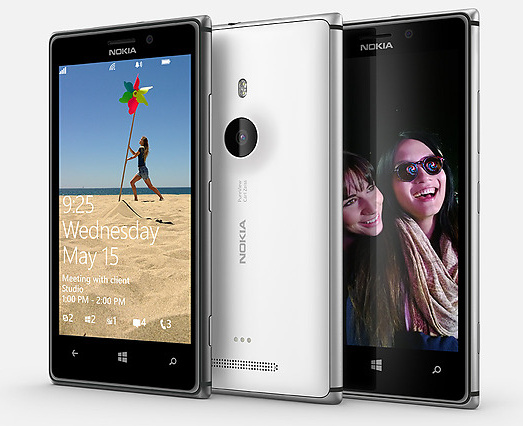
Nokia Lumia 925 Review

Close window


Key features
  • Quad-band GSM/GPRS/EDGE support
  • Quad-band 3G with 42 Mbps HSDPA and 5.7 Mbps HSUPA support
  • 4.5" 16M-color PureMotionHD+ AMOLED capacitive touchscreen of 1280 x 768 pixels
  • 8 megapixel autofocus camera with LED flash, 1080p@30fps video recording
  • Optical Image stabilization with floating lens technology
  • 1.3MP front-facing camera
  • Windows Phone 8 OS
  • 1.5GHz dual-core Krait CPU, Adreno 225 GPU, Qualcomm MSM8960 chipset, 1GB of RAM
  • Wi-Fi 802.11 a/b/g/n, dual-band
  • GPS receiver with A-GPS and GLONASS support
  • Free lifetime voice-guided navigation
  • 32GB of inbuilt storage
  • Stylish aluminum frame results in a thinner and lighter profile than the Lumia 920
  • Active noise cancellation with a dedicated mic
  • Wireless charging with optional accessories
  • Built-in accelerometer, gyroscope and proximity sensor
  • Standard 3.5 mm audio jack
  • microUSB port
  • Bluetooth v3.0 with A2DP and file transfers
  • SNS integration
  • Xbox Live integration and Xbox management
  • NFC support
  • Digital compass
  • Nokia Music
  • FM radio

Main disadvantages

  • No microSD card
  • No system-wide file manager
  • No lockscreen shortcuts
  • Mono sound for video recording

Improved user interface

Windows Phone 8 is Nokia's only smartphone OS and the Finns have taken care to add as much value as possible to the Lumia line. And since Microsoft doesn't really allow UI customizations, adding value translates to supplying exclusive apps and services.
The Nokia Lumia 925 comes with the new Amber update preinstalled but that doesn't change the user experience dramatically. It does add a few features like Glance Screen, FM radio support and a new camera lens, but the rest is barely different from the previous WP8 iterations.

The Nokia Glance Screen is one of the coolest features that the Amber update brings along. It's a tribute to the MeeGo lockscreen (and Symbian smartphones of old), where you can always see a clock and get any missed events flagged right on the black standby screen. And just like on the Nokia N9, you can wake up the phone with a double tap. The Glance Screen feature leverages on AMOLED to achieve very good power efficiency - only the handful of pixels needed to display the clock and notifications are actually lit up.
There are several options to the Glance Screen feature. It can either be Timed (after a pre-set period of time it turns off the screen completely to save battery) or always on, if you want to be able to see it at all times.
There's also a fourth option called Peek. It allows you to wave over the phone's face to display the clock and notifications, much like Samsung's Quick Glance.

Final words

It's been eight months since the release of the Lumia 920. At that time, the great design and updated WP8 build, complete with Nokia customizations and exclusive apps, resulted in one of the best smartphones representing the platform.
Much has changed in the time between that launch and the Lumia 925 we have today. The introduction of the Lumia 1020 is perhaps the most significant development, although that matters mostly to photography purists that want the best possible image quality from their smartphone.
New flagships and camera interfaces aside, the user experience you'll get is largely the same as what the Lumia 920 offered more than half a year ago. Even the rebranded HERE Maps and Drive+ global navigation suite is no longer a Lumia exclusive, as Nokia have made it available (for a price) to other WP8-powered handsets in the Windows Phone Store.
So with such marginal software updates (which the Lumia 920 will also get) aside, what it really comes down to with the Lumia 925 is the updated exterior and the new 6-element camera lens. The improved image quality along with the AMOLED screen, aluminum frame, and resultant thinner and significantly lighter body are all marked improvements over the Lumia 920.
But, how much will those improvements actually run you? Currently, the Lumia 925 retails at around €500. This is significantly more than the Lumia 920, which can be had for around €325. So while the 925 is definitely a better smartphone, we can't in any way recommend paying such a premium for it.
Nokia Lumia 920
Nokia Lumia 920
After all if you must have Nokia's cream of the crop then the just-announced Lumia 1020 is the only way to go, anyway. It features an incredible 41MP PureView camera, complete with a huge sensor OIS and Nokia's very easy-to-use and intuitive Pro Cam Lens. However, besides doubling up the RAM to 2GB, all the other internals are identical, so there isn't much of a performance difference between that and the Lumia 925. The real kicker, though, is the price. The Nokia Lumia 1020 is currently up for preorder for AT&T in the US for $660 unsubsidized, which translates to only slightly more than the Lumia 925.
Nokia Lumia 1020
Nokia Lumia 1020
If, however, you want to go easy on your wallet, and don't want to lug around a hefty device like the Lumia 920, there are a couple of viable alternatives. The Samsung ATIV S and HTC Windows Phone 8X both offer Windows Phone 8 for less than even the Lumia 920, with the ATIV even giving you a bigger screen and larger battery. And we can't reiterate enough that the formerly exclusive-to-Nokia mapping and global navigation suite is now available, to these devices as well. It's even free of charge in North America, as well as the UK, Germany, Spain, France and Italy.
Samsung Ativ S I8750 HTC Windows Phone 8X
Samsung Ativ S I8750 • HTC Windows Phone 8X
Ultimately, if premium feel on the Windows Phone platform is what you're after, and you don't like a jutting camera sensor dominating the back of your device, then the Nokia Lumia 925 is your best bet. It addresses two of the biggest issues people had with the former flagship, bulk and weight, and the AMOLED display's ability to turn off pixels lends itself really well to the predominantly black Windows Phone interface.
Pricing is its biggest Achilles' heel, though, as it's hard to justify paying over €150 more for a Lumia 920 with a redesigned body, especially with competitor alternatives hovering at half the price! More than likely, the release of the Lumia 1020 will take most of the wind out of the 925's sales (sic), so to speak, which may force it into a more accessible midrange market.